
A joint venture in Moscow. A subsidiary filing in Tokyo. A distribution deal in Lisbon. Three UK businesses, three regulators, three completely different certification rulebooks — and none of them had ever ordered translation services in the UK before.
That’s the reality of market expansion. The language barrier is rarely the hard part. The hard part is figuring out, market by market, exactly what a foreign regulator or counterparty will actually accept — and getting it right before a signing date, a filing deadline, or a partner’s legal team starts asking questions.
We took on all three at once, working out each jurisdiction’s requirement before a single word was translated, so every document landed on the right desk in the right format the first time.
Our Work
| Who | UK businesses expanding into new international markets |
| Service | ITI, NAATI and Professional Certified Translation |
| Languages | Russian, Japanese, Portuguese → English (and 200+ more) |
| Documents | Contracts, corporate filings, compliance documentation |
The Case Study Covers:
- Three businesses, three markets, three certification standards
- How we worked out what each regulator would actually accept
- The outcome for each deal
Client Background
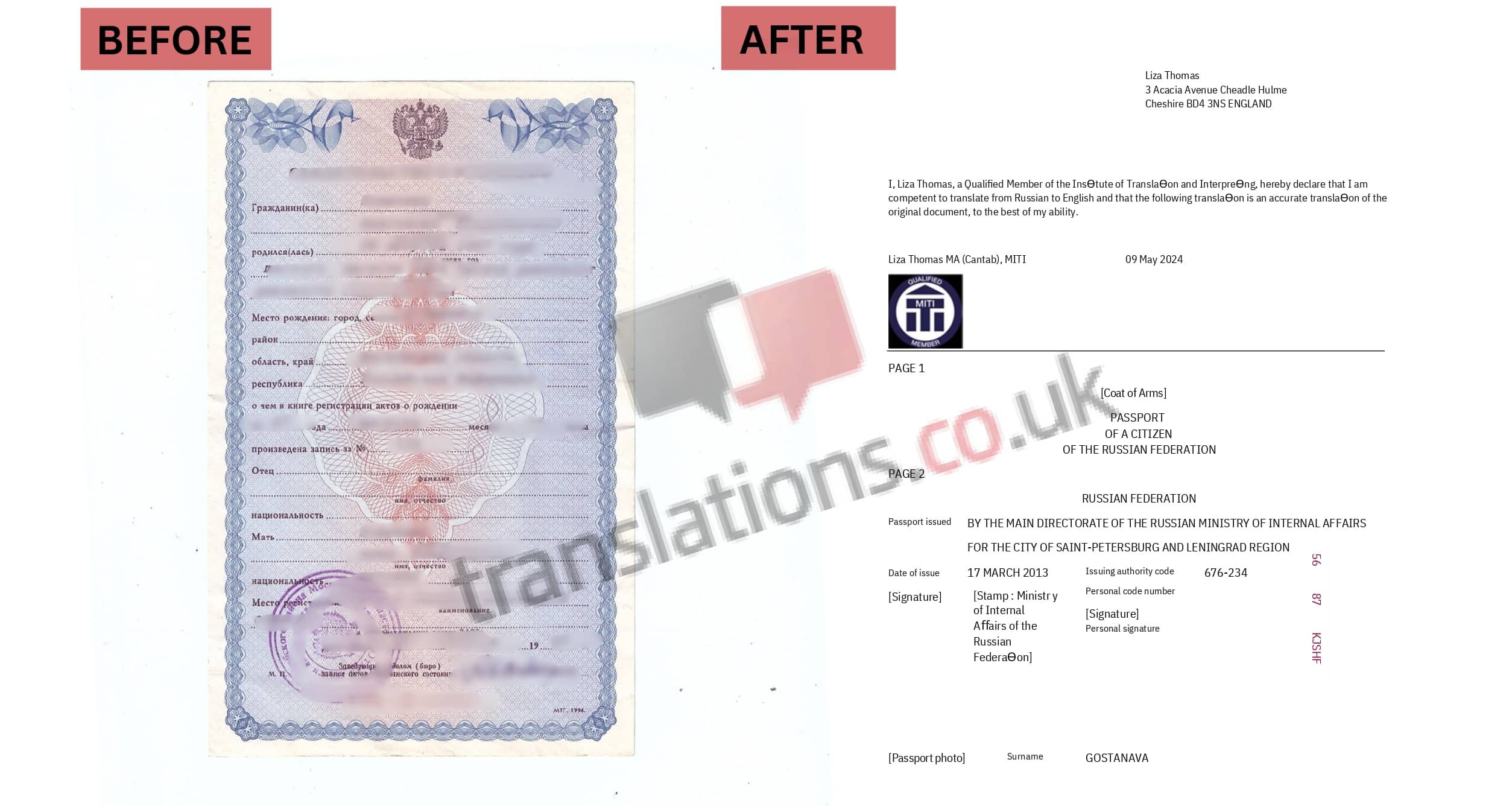
- The engineering firm was closing a joint venture in Russia. Their Russian counterparty’s legal team wanted contracts in a form they could rely on in a dispute, which meant ITI certification, not just an accurate and professional translation, with certification.
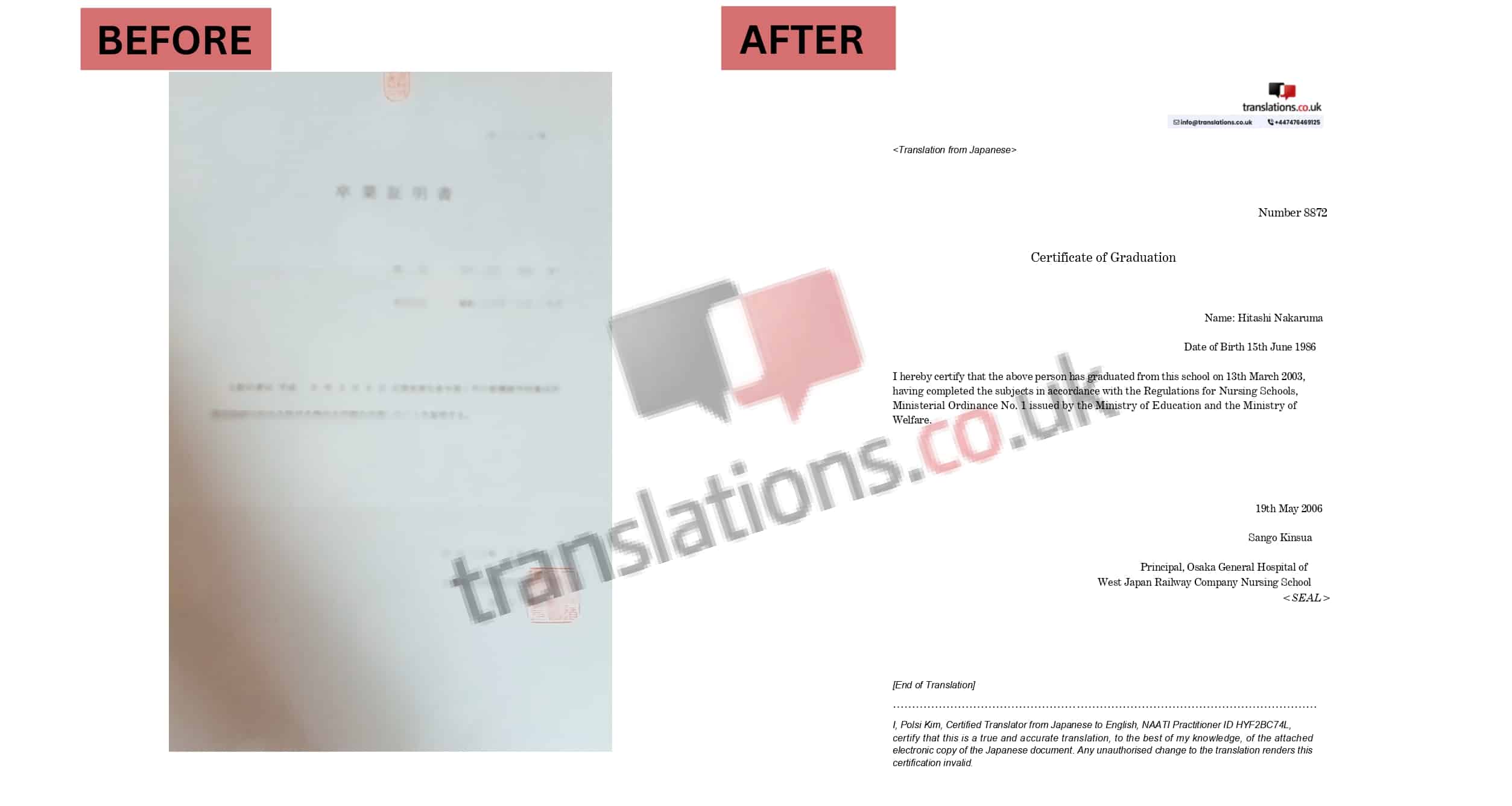
- The retail group was opening its first overseas subsidiary in Japan and had a stack of corporate filings due with the local regulator on a fixed date.
- The healthcare supplier was onboarding a Portuguese distribution partner and needed compliance paperwork both sides could point to as an official record.
Three unrelated deals, running in the same quarter, each stuck on the same question: which certification actually satisfies the people on the other end?
Challenges
The stakes varied, but the pattern was the same across all three:
- Nobody knew, going in, which certification standard their regulator or counterparty required.
- Every document was commercially sensitive and tied to a hard deadline — a signing date, a filing date, an onboarding date.
- Getting the certification wrong wasn’t a minor fix — it meant re-submitting and potentially missing the deadline entirely.
- Each language brought its own technical vocabulary: contract law in Russian, regulatory filing language in Japanese, compliance terminology in Portuguese.
Solution
We didn’t apply one process to all three — we built three, in parallel:
- Before translating anything, we confirmed exactly what the receiving regulator or counterparty in each market required.
- Each project went to a translator who knew the language and the subject — contract law, corporate filings, or healthcare compliance, respectively.
- The Russian contracts came back ITI certified, the Japanese filings NAATI certified translation, and the Portuguese compliance documents Professional certified — each formatted the way its recipient expected.
- One project manager sat across all three businesses’ work, so nobody had to chase multiple contacts to find out where things stood.
- Everything was checked against the receiving party’s requirements before it went out, and handled under strict confidentiality throughout.
Results
All three deals closed on schedule:
- Every document was accepted first time — no resubmissions, no revised certifications.
- The joint venture, the subsidiary filing, and the distribution agreement all met their deadlines.
- Three businesses, three certification types, one provider — no juggling separate agencies per market.
- All three have since come back to us for further work as their expansion has continued.
Conclusion:
None of these three businesses set out to learn the intricacies of Russian contract certification, Japanese regulatory filing standards, or Portuguese compliance documentation. They just needed their deals to close.
That’s really what this comes down to: knowing the certification landscape well enough that the business doesn’t have to. Three markets, three rulebooks, one outcome for all of them — on time, accepted, done.