
Ask a university admissions office, a scholarship body, and a professional accreditation council what they need from a translated transcript, and you’ll get three different answers. Students rarely find that out until an application has already stalled.
We picked up three such cases in the same intake season — a Korean student, a Spanish graduate, and a Pashto-speaking scholarship applicant — each with paperwork bound for a different kind of institution, each institution insisting on its own certification format.
None of them needed convincing that translation services in the UK mattered. What they needed was someone to tell them, correctly, what “certified” meant to the specific office reading their file.
Our Work
| Who | International students applying to UK universities, scholarships and accreditation bodies |
| Service | Standard, NAATI and in-house Certified Translation |
| Languages | Korean, Pashto → English |
| Documents | Academic transcripts, degree certificates, scholarship paperwork |
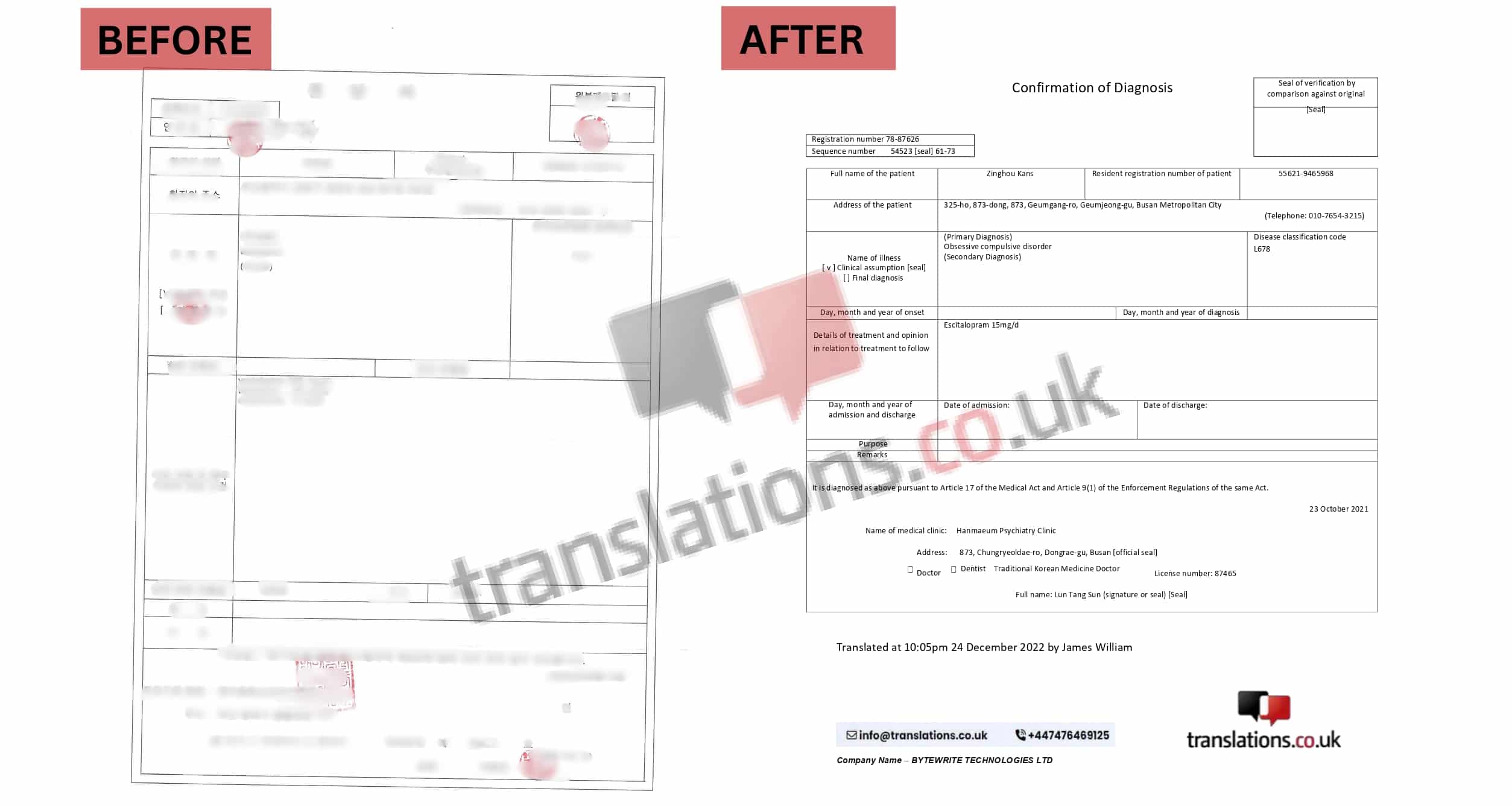
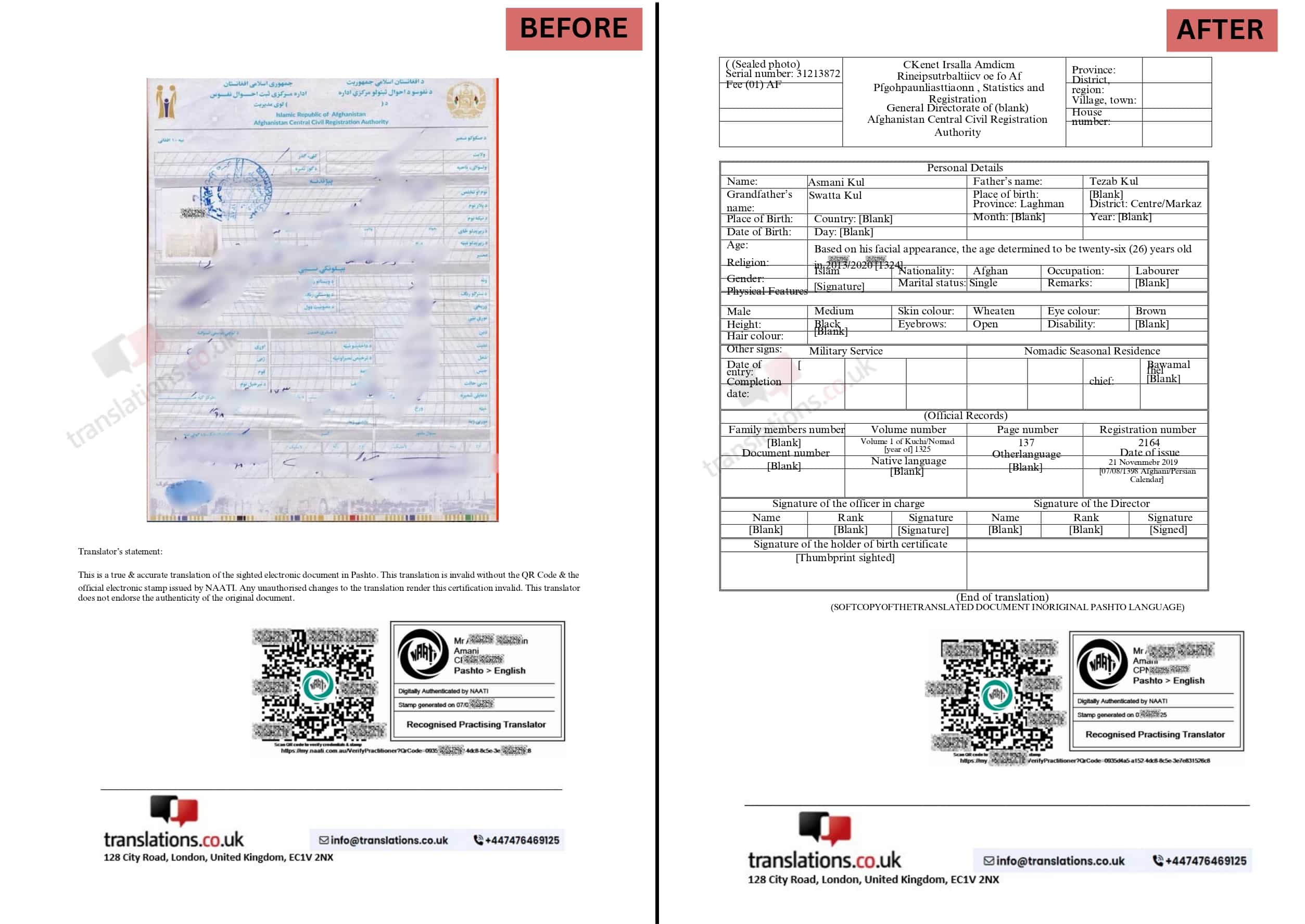
The Case Study Covers:
- Three students, three institutions, three sets of certification rules
- How we matched each transcript to the right requirement
- What happened to each application
Client Background
The Korean student had an offer from a UK university conditional on her transcripts arriving translated and certified in the exact format the admissions office listed on its checklist — nothing more, nothing less.
The Spanish graduate needed his professional qualification recognised by a UK accreditation body before he could start a placement, which meant a certification standard the body’s compliance team could verify against its own register.
The Pashto-speaking applicant was applying for a competitive scholarship with a submission window measured in days, not weeks, and a certification requirement buried three pages into the fund’s guidance notes.
Three students, three deadlines, three institutions that don’t talk to each other and don’t share a certification standard.
Challenges
- None of the three arrived knowing which certification type their institution actually wanted — only that guessing wrong meant losing their place in the queue.
- The scholarship applicant’s deadline left almost no room for a second attempt if the first submission was rejected.
- Academic and professional terminology doesn’t translate literally — grading scales, qualification titles, and institutional language all needed careful handling to mean the same thing on the other side.
- Each student was managing this alongside exams, visa paperwork, or job offers — certification wasn’t the only thing on their plate.
Solution
We treated each case as its own project rather than a variation on the same template:
- For the Korean student, we checked the university’s exact checklist wording and matched the certification and formatting to it precisely.
- For the Spanish graduate, we produced a translation with the credentials and traceability the accreditation body’s compliance process needed to verify.
- For the Pashto applicant, we prioritised turnaround without cutting corners, delivering a NAATI certified translation inside the scholarship’s tight window.
- All three were handled by linguists with academic or professional translation backgrounds in the relevant field, and reviewed before release so nothing was left to chance.
Results
- All three applications were accepted with the translation on the first submission — no institution came back asking for a different certification.
- The scholarship applicant made her deadline with two days to spare.
- The Spanish graduate started his placement on schedule, credentials fully recognised.
- The Korean student’s university offer was confirmed without further document requests.
Conclusion:
Three students, three institutions, three certification standards — and not one of them needed to become an expert in the difference. That’s the point: a transcript that satisfies a university checklist, a professional register, and a scholarship fund’s guidance notes isn’t the same document three times over. It just needs someone who already knows what each of them is actually asking for.