When you need to translate your official documents in the UK, knowing when you need certified vs notarised translation will save a lot of time, money, and potential rejection of your application.
A certified translation include signed copy, and the notarised translation adds government verification; a UK notary public witnesses the translator’s signature and adds an official seal. But this is not it. There are more differences, along with cost, which we will discuss in this blog.
Key Takeaways
- Certified translation includes a translator’s signed statement and notarised translation adds legal verification from a notary public
- Most UK visa applications only need certified translations.
- Notarisation is mandatory for court documents and international use.
- The choice depends on the individual’s specific requirement.
- Notarised translation adds £40-£120 to your certified translation cost.
- The total cost difference is £65-£180 per document.
What Makes Certified Translation Different from Notarised Translation?
A certified translation refers to the professional translation of the original document, which has a certification statement from the certified translator. This statement, confirming that the translation is a true and accurate translation, makes sure the translation is accurate and complete. To certify a translation, the translator must be certified by a qualified professional or be a part of a reputable translator or translation company. The accuracy of the translation is very important as it serves as a legal representation of the original document.
A certified translation includes a signed statement that contain main translation requirements concerning the translator:
- Their full name
- Contact details
- Singature
- Date of translation
Notarised translation takes this one step further for official purposes. A UK notary public verifies the translator’s identity and witnesses their signature, which makes the translation certified by a government official. The notary adds their official seal and signature.
This creates an extra layer of legal verification. To get the best results, you must choose the right certified translation service or language translation services that have qualified translators who have translation certification. The translation industry in the UK has professional standards set by bodies like the Institute of Translation and Interpreting, ensuring the quality of translation meets regulatory requirements.
Which Is Better Certified or Notarised translation?
You might think: Do I need certified or notarized translation? Here is the table for you to understand things better:

Now, if you are wondering when is a certified translation required or when you need notarized translations, read on!
When Do You Need Certified vs Notarised Translation?

UK Visa and Immigration Requirements
Understanding the difference between certified and notarised translation helps you make an informed decision. When requesting the translation, you must think about what you need during immigration, between certified vs notarized translation for visa applications. UKVI accepts certified translations for all visa applications. You do not need a notarised translation. In order to provide a certified translation, the document must be certified according to UK Home Office standards.
The UK government and UK Home Office need four elements to accept certified translation. When you provide certified translation, make sure the translation is certified with these requirements:
- Confirmation that it is an accurate translation of the original document
- Date of translation
- Translator’s full name and signature
- Translator’s contact details
Common visa documents that need certified translation:
- Birth certificates
- Marriage certificate
- Bank statements
- Employment letters
- Educational certificates
So when you ask when a certified translation is required, you must know that a standard certified translation works for all those.
Court and Legal Proceedings
Family court proceedings need certified and often notarised document translation. Property transactions need a notarised translation. Power of attorney documents need notary verification. In these cases, a certified translation is required as a baseline, with notarisation adding legal weight. The difference between notarised translation and certified translation is important to know in legal contexts.
UK courts sometimes accept certified translation. The safer option is notarised translation for court matters. The difference between certified translation and notarised translation can decide case outcomes.
International Document Use
Documents in foreign countries need notarisation.
Countries that require notarised translation are:
- Spain
- France
- Many European countries
Some may need apostille certification, too.
Embassy applications vary:
- UK embassies accept certified translations
- Foreign embassies inthe UK need notarisation
Common Misconception in Choosing Certified and Notarised Translations
Now you know which is better certified or notarized translation for you. It completely depends on your specifications. But here are some common misconceptions that you should clear:
Notarised translation is always better
It is not necessary that notarised transition will always be better. In the UK, certified translation is more than enough and saves a lot of money.
Any translator can certify their work
Only qualified translators of professional bodies can provide certified translations that authorities will accept.
Notarisation guarantees translation accuracy
No, notarisation verifies the translator’s identity and signature, not the translation quality. The translator is responsible for the accuracy.
I can use certified translation everywhere
Not true. Many foreign countries specifically require notarisation and won’t accept certified translation alone.
Breaking Down Certified Translation Costs in the UK
Best Price Range
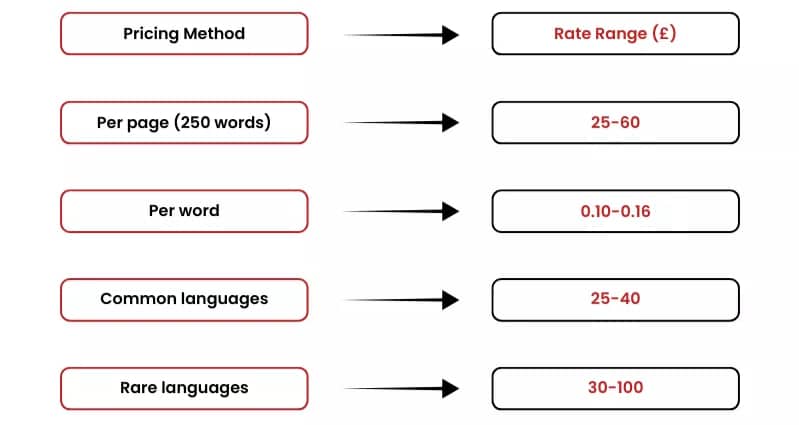
Certified translation pricing in the UK follows a clear pattern. Most agencies charge £25-£60 per page. One page has around 250 words. If your document has 1,000 words, then expect to pay between £100 – £240.
What Affects Certified Translation Pricing?
Language pair plays an important role. Common European languages cost less; they are not tough, but translating from Spanish to English might cost around 25-40 per page. Rare language pairs like Hindi to Mandarin Translation can cost £30-£100 per page due to less qualified translators.
Document complexity matters too:
- Simple birth certificate: Lower cost
- Legal contract: Higher cost
- Technical document: £0.20-£0.30 per word
Urgency increases costs sustainability:
- Standard delivery(3-5 days): Base price
- Express service (24 hours): Extra charges
- Same day service: Up to 100% more
Hidden Costs to Watch For
Some translation agencies add charges you might not expect:
- Formatting fees: £20-£50 for layouts with table or stamps
- Hard copy delivery: £5-£15 for UK post
- International Courier: Higher fees
- VAT: 20%
Understanding Notarised Translation Costs
Fee Structure-
- Notarisation costs £40-£120 on top of your certified translation fee.
- Personal documents start at £40-£96, including VAT. Business documents cost around £70-£120 plus VAT.
- Most notaries charge per document. Some charge hourly rates for difficult matters.
- Hourly rates: £250-£280
How Much Does Notarised Translation Cost?
Here are the real numbers-
A standard birth certificate needs one page of certified translation:
- Certified translation: £30-£50
- Notary public fee: £40-£96
A three-page legal contract needs more:
- Certified translation: £75-£150
- Notary public fees: £80-£120
Notaries might arrange legalisation or apostille services for international use
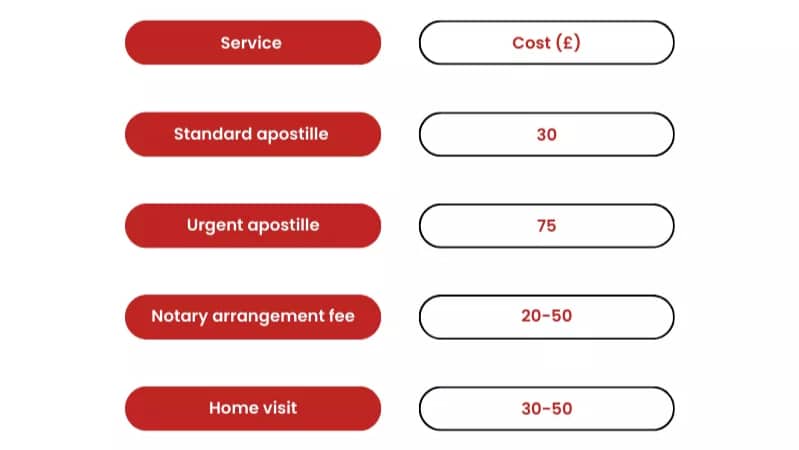
Certified vs Notarised Translation UK Cost Comparison
Here are the key differences in cost difference between certified vs notarised translation breaks down per page:
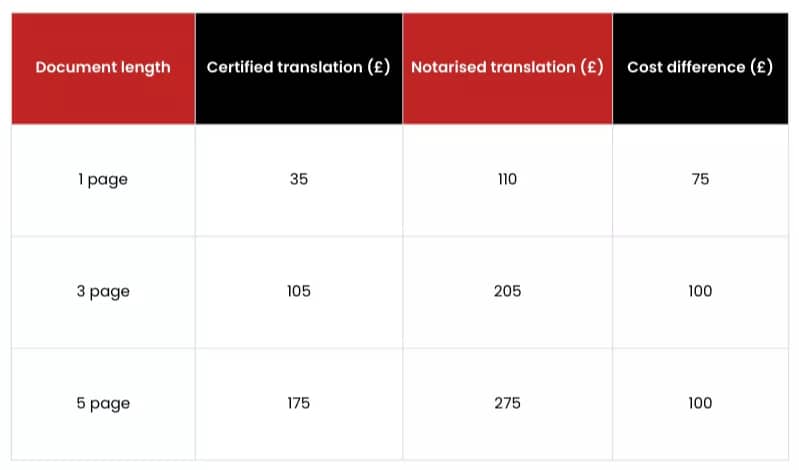
It is necessary to understand the difference between Certified vs Notarised translation cost can vary based on so many factors. But first, you should know which service you need.
Which Translation Type Costs More for Legal Documents?
Legal documents cost more in both types of translations. Certified legal translation costs £40-£120 per page. However, notarised legal translation costs even more; they charge around £80-£120.
The cost gap increases with legal content. Legal translators charge extra rates. Notaries charge even higher fees for business documents than personal ones.
Making Smart Choice: Which Service Saves You Money?
To get the answer, ask these two questions:
Where will you submit this translated document?
UK visa applications need a certified translation only. This saves £40-£120 per document. Court submissions might not need notarisation or sworn translation. So you have to choose the translation services UK wisely.
What does the receiving authority require?
Check official requirements. Don’t assume you need the expensive option. Most UK universities accept certified translation, while the DVLA accepts certified translation.
How to Get the Best Price on Translation Services?
Follow these money-saving tips while looking for an official translation of the original document. When choosing a translation or translation company, look for members of the Association of Translation Companies who can provide certified translation:
Before you order:
- Start with clear scans of good quality to avoid extra charges.
- Get quotes from multiple translation companies
- Check what all is included, like VAT, delivery, and formatting
During the process:
- Avoid rush fees when possible, plan ahead to save at least 20-25%
- Translate only what’s needed and not entire lengthy documents
Quality matters:
Never sacrifice the quality of the translation for price. Rejected translations cost more in the long run. The translation may be rejected if it does not meet standards. Missed deadlines or resubmissions waste money and time.
Final Thoughts
The difference between certified and notarised translation isn’t just about cost – it’s about meeting specific legal and official requirements. Certified translation provides professional attestation of accuracy, suitable for most UK purposes. Notarised translation adds government-level verification, essential for court proceedings and international use.
Understanding these differences ensures you choose the right service the first time, avoiding costly delays and rejected applications. Choose reputable services from the translation industry with a proven track record, like us, to pass scrutiny the first time.
Frequently Asked Questions
When to choose a certified over a notarised translation?
You can choose a certified and notarised translation according to your needs. You can choose certified translation if legal or academic work is involved and where accuracy must be sworned by a sworn translator, but you can use notarised translation when you need extra authenticity.
Can a certified translation be used instead of a notarised translation?
No, certified and notarised translations are not the same. Your certified translation in the UK must be notarised if you want it to be accepted in another country.
What is the difference between certified, notarised, and sworn translation?
Certified translations must have a signed statement of accuracy, notarised translations add a notary’s stamp, and sworn translations are legally verified by a translator appointed by the court.
How long does it take to translate both certified and notarisation translation?
Certified translation typically takes 3-5 business days for standard service. Notarised translation requires additional time (1-3 days) for the notarisation appointment and processing, making the total timeframe 4-8 business days for standard service.

Want To See My Profile — Check Now
- Translation vs Interpretation: Understanding the Key Differences - 18th March 2026
- Difference between Certified vs Notarised Translation: A UK Guide - 12th February 2026
- How to Choose a Translation Company: 5 Key Factors to Consider - 28th January 2026